
Interview with Mamoda Team: How Was the Industry's First DiT-MoE Video Generation Foundation Built?
ByteDance's engine released its self-developed ad content governance model Mamoda 2.5, combining MoE architecture with DiT diffusion model for the first time, creating the industry's first DiT-MoE video generation foundation. The model provides end-to-end services from risk diagnosis to automatic material repair, helping businesses reduce compliance costs. The team revealed the model has 25 billion total parameters but activates only about 3 billion per inference, improving inference efficiency by 11-15 times.
Source notice: This article is compiled from public sources. Original information and copyright remain with their publishers.On July 9, at the 2026 Global Digital Economy Conference, ByteDance's engine (Juliang Engine) officially released its self-developed ad content governance large model Mamoda 2.5. It is the first to combine the Mixture of Experts (MoE) architecture with the DiT diffusion model, creating the industry's first DiT-MoE video generation foundation. The model provides efficient ad governance for the platform and end-to-end services for businesses, including risk diagnosis, violation localization, and automatic material repair, helping reduce compliance costs and improve material pass rates, driving efficiency upgrades in ad industry compliance.
From actual business user cases, Mamoda 2.5 can automatically rectify various types of non-compliant materials. For example, an ad material showing a person holding a cigarette violated the platform's ban on tobacco and smoking scenes; after processing by Mamoda 2.5, the cigarette was precisely removed while preserving the original visual effect. Another short video material had the phrase "the ceiling of lilies" at the 9th second, implying superiority over competitors, risking violation of the Advertising Law; the system quickly located the problematic text and automatically corrected it. The repaired material can then be submitted for advertiser approval and use.
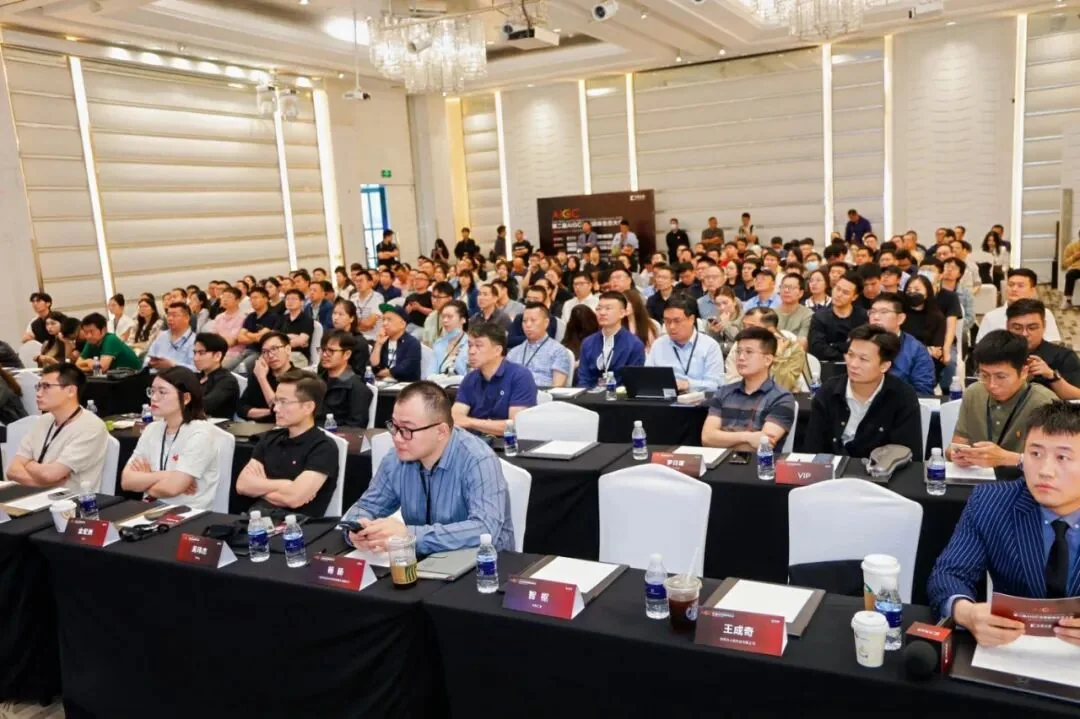
How does Mamoda 2.5's DiT-MoE architecture work? Where is the future of content governance in the AI era? Zhidongxi conducted an in-depth interview with the Mamoda team.
1. 128 Fine-Grained Experts, Top Performance on Three Benchmarks
Mamoda 2.5 achieved excellent results on mainstream authoritative evaluation benchmarks for instruction-based AI video editing (OpenVE-Bench, FiVE-Bench, ReCo-Bench), with T2V inference efficiency 11-15 times higher than mainstream open-source models.
This impressive performance stems from architectural innovation. Most current video models are based on Transformer diffusion models (DiT), which perform well in image and video generation and follow Scaling Law (larger parameters yield better results). However, simply stacking parameters incurs huge computational costs, leading to slow inference and difficult deployment.
The Mamoda technical lead revealed that from the start, the team aimed for "inference-friendly." The platform handles massive traffic and requires high video review efficiency, so the model must be fast. This drove the team to combine MoE with DiT for the first time, creating the industry's first DiT-MoE video generation foundation.
The core idea of MoE is simple: instead of having one "omnipotent" large network handle all tasks, train multiple "expert" networks and dynamically assign tasks to the most suitable experts. The goal is to retain DiT's powerful generation capability while achieving "sparse activation" via MoE, significantly reducing computation.
Thus, the Mamoda team trained a model with 25 billion total parameters, but only about 3 billion activated per inference (sparsity ~12%). It includes 128 fine-grained experts (including one shared expert) using a Top-8 token-level routing strategy, maintaining strong model capability while greatly improving inference efficiency.
2. Rejecting Fine-Tuning of General Models: Why Mamoda Chose the Harder Self-Development Path?
The Mamoda team did not adapt existing general large models; instead, they fully self-developed the architecture, data scheme, and training strategy for ad governance.
Why full self-development? The team cited three reasons: First, operational efficiency and ROI. The platform model must handle massive online traffic with strict cost and efficiency standards; only self-development can optimize architecture and algorithms. Second, the platform's business scenario is unique. Ad risk control requires identifying violations, interpreting them, rectifying, and regenerating content—a process naturally suited to an integrated understanding-and-generation model architecture. Additionally, industry risks change rapidly and require high detail recognition; general models often fail to capture small violations in video. Third, precise control over compliance standards. Review rules include clear clauses and many scenarios requiring contextual judgment. General models are not optimized for such fuzzy scenarios, making it hard to maintain stable review standards.
Ultimately, only self-development can achieve extreme optimization for ad governance's unique needs. However, the path was not smooth. Initially, Mamoda 2.5 did not include a shared expert. The team admitted: "Without a shared expert, training results were poor." When processing editing tasks (adding or deleting content), visual consistency (lighting, background integration) must be maintained, but without a shared expert, each expert worked independently, lacking a "general consultant" for common visual knowledge. Later, they added a shared expert responsible for general visual knowledge. "After adding it, the effect improved... for example, lighting and background integration, whether adding or deleting, these effects must be ensured." This seemingly simple adjustment came from repeated experimentation.
MoE sparse activation solved "how many parameters to call each time," but DiT's inference steps remained heavy. The team revealed that the original model required 50 inference steps for satisfactory editing. For a system processing massive daily materials, 50 steps meant huge latency and computational cost. They used reinforcement learning and self-distillation to compress 50 steps to 4, reducing 480p video editing latency from 69 seconds to 9 seconds—an 8x efficiency improvement, making "minute-level review" possible.
3. Three Years, Four Major Iterations: Mamoda Becomes Businesses' "External Compliance Team"
Starting from single-point risk detection for text ads in version 1.0 (June 2024), to the full-chain breakthrough in version 2.5 (July 2026) covering all video formats, and the planned version 3.0 (within 2026) deepening audio understanding and editing, Mamoda is steadily achieving full-modal governance. This "text → image → short video → full-modal" iteration path represents three years of four major iterations, evolving from "seeing" to "fixing."
For small and medium businesses, the Mamoda team aims to make compliance no longer a "speed bump" but an "accelerator" for creating correct and good content. Mamoda 2.5 only fixes confirmed violations (e.g., exaggerated words with rigid rules), locating issues at the smallest unit—which frame, which sentence, which audio segment—and providing precise diagnosis and repair suggestions.
The team likens Mamoda to an "external compliance team" for small advertisers, making tasks that previously required professional experience or multiple people more efficient and accessible. Previously, those who understood rules better or had stronger compliance teams could reduce trial costs and scale up. Now, the platform hopes Mamoda can democratize this capability, helping businesses understand issues and fixes clearly without repeated failures. "We hope to make following rules clearer and good content easier to be seen." That is the team's vision.
AI has lowered content creation barriers to near zero and reduced forgery costs to unprecedented levels. Previously, forging a celebrity endorsement ad required professional teams and extensive post-production. Today, a skilled AI user can generate a realistic fake video in minutes. The Mamoda team highlighted the most challenging scenario: "portrait authorization." In authorization verification, subjects with more complete information and clear authorization chains are easier to identify and handle. Conversely, less well-known figures with incomplete public authorization info are more vulnerable to AI-based impersonation by unscrupulous businesses, posing higher verification difficulty.
Over the past year, Mamoda's platform governance capabilities have delivered initial results: preemptively intercepting billions of non-compliant materials, shutting down over 4 million violating accounts, and handling a peak of over 200,000 black-market accounts in a single day; platform content CCR decreased 56.2% year-on-year, and fulfillment CCR decreased 67.1%.
Looking ahead, Mamoda's next step is an "adaptive intelligent risk control system." The team revealed the technical path: "We have verified that understanding promotes generation in the unified architecture. Next, we need to work on how generation promotes understanding." This points to a deeper goal: using generation capability to enhance understanding, enabling the system to self-evolve in adversarial settings.
Conclusion: Mamoda Sets an Example for the Industry
Amid the trend of Chinese AI large models moving from general capability breakthroughs to vertical scenario deep cultivation, Mamoda has delivered a unique answer. Over the past two years, the industry's main theme was "parameter competition," with escalating numbers. But since the second half of 2025, a more rational consensus has emerged: the value of large models lies in real-world industrial deployment. Mamoda 2.5 stands at this turning point, diving into the specific scenario of ad governance.
More importantly, Mamoda provides a reference model for "using AI to govern AI." With AI lowering content creation barriers to near zero, platform governance cannot rely on human labor to counter machine batch production. The only way is to use technology to respond to technology, systems to counter systems. In this race between technology and risk, there is no end. But Mamoda proves a feasible path: using technical depth to support governance precision, not only making violations invisible but also making quality content easier to create, understand, and see. This may be what AI-era platform governance should look like.