Beijing Issues 18 AI4S Measures: Encouraging AI Scientists and Building 24/7 Unmanned Labs
Beijing released the Implementation Plan for Accelerating AI-Empowered Scientific Research (2026-2028), outlining 18 key tasks across five directions: autonomous labs, scientific models, data, scenarios, and ecosystem. The goal is to build a globally influential scientific intelligence innovation hub by 2028. The plan encourages 24/7 unmanned autonomous labs and AI scientists to automate the entire research process.
Source notice: This article is compiled from public sources. Original information and copyright remain with their publishers.Source: Zhidx (WeChat ID: zhidxcom) Author: Li Shuiqing Editor: Mo Ying
On July 1, the Education, Science, and Talent Work Leading Group of the Beijing Municipal Committee of the Communist Party of China officially issued the "Implementation Plan for Accelerating AI-Empowered Scientific Research in Beijing (2026-2028)" (hereinafter referred to as the "Implementation Plan"), making it the first medium- to long-term implementation plan for AI for Science (AI4S) in China, covering a complete system including autonomous laboratories, research agents, scientific large models, scientific data centers, and high-value application scenarios.
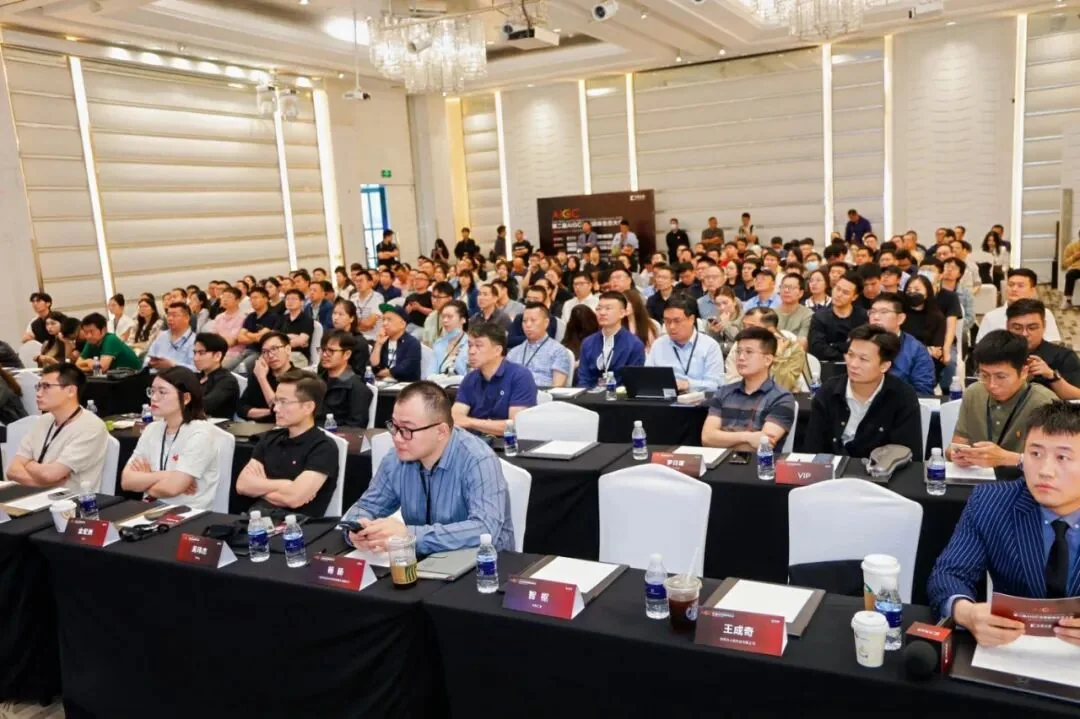
The plan outlines 18 key tasks across five directions: autonomous laboratory construction, benchmark scenario applications, scientific model systems, scientific data supply, and innovation ecosystem. It explicitly aims to build a globally influential scientific intelligence innovation hub by 2028. The most striking aspect is Beijing's initiative to create 24/7 autonomous laboratories, realizing the vision of "scientists think during the day, AI conducts experiments at night."
I. Detailed Analysis of Beijing's 18 AI4S Measures
1. Autonomous laboratories as core carriers with diversified policy support. The plan supports the construction of highly intelligent new experimental platforms integrating AI, embodied robots, and high-throughput instruments, capable of full-process autonomous operation from hypothesis generation to discovery. Supporting policies include special bonds, Beijing Science and Technology Innovation Vouchers, and recognition of first (set) major technical equipment. Standards and grading assessments will be developed. Haidian and Huairou districts are key implementation areas.
2. Six high-value benchmark scenarios: high-energy physics, materials science, healthcare, life sciences, quantum technology, and biological breeding.
3. A three-tier collaborative scientific model system: "basic theory—general scientific foundation models—specialized domain professional models."
4. Advancing the Beijing Scientific Data Center to leverage national scientific data resources, building intelligent data processing and dataset systems.
5. Fostering an innovation ecosystem with talent, computing power, and branding support, including a dedicated scientific AI computing cluster and events like the International Scientific Intelligence Conference and two competitions.
II. Beijing's Research Foundation Being Revitalized by AI
Beijing boasts over 90 universities, more than 1 million researchers, over 800 academicians of the Chinese Academy of Sciences and Engineering, 4 national laboratories, and 145 national key laboratories. R&D investment intensity exceeds 6%, and it has ranked first globally in the Nature Index for scientific research cities for nine consecutive years. Since issuing the first provincial-level AI4S policy in 2025, numerous achievements have emerged: the CAS Panshi scientific foundation model, Zhongguancun Academy's MegaDFT model, Beijing Academy of Artificial Intelligence's (BAAI) neuroscience model Wujie·Brainμ1.0, and DeepChem's Piloteye platform. Beijing will build AI4S industrial clusters at the Zhongzhiyuan AI4S themed building in Haidian and the "Model World" community in Huairou Science City.
Conclusion: Beijing takes the lead in building a national AI research model, aiming not only to become a global scientific intelligence innovation hub but also to explore a new path for AI-driven paradigm shifts in scientific research.